
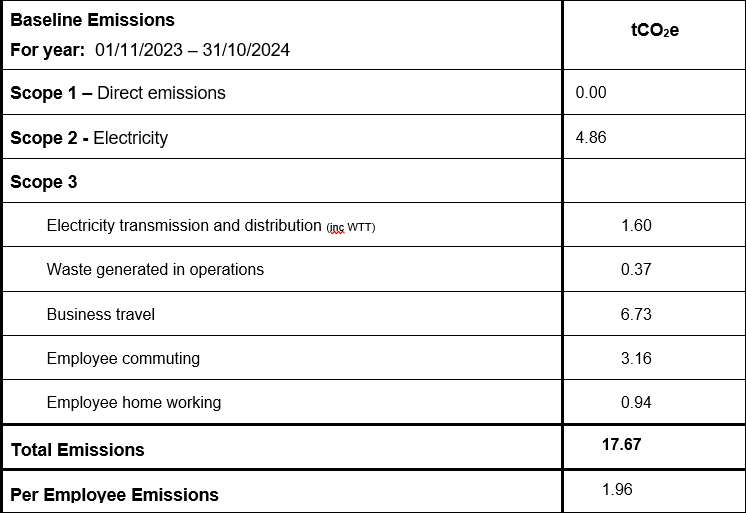
Baseline emissions are a record of the greenhouse gases that have been produced in the past and were produced prior to the introduction of any formal strategies to reduce emissions. Baseline emissions are the reference point against which emissions reduction can be measured.
Data improvement plan
Our ambition is to:
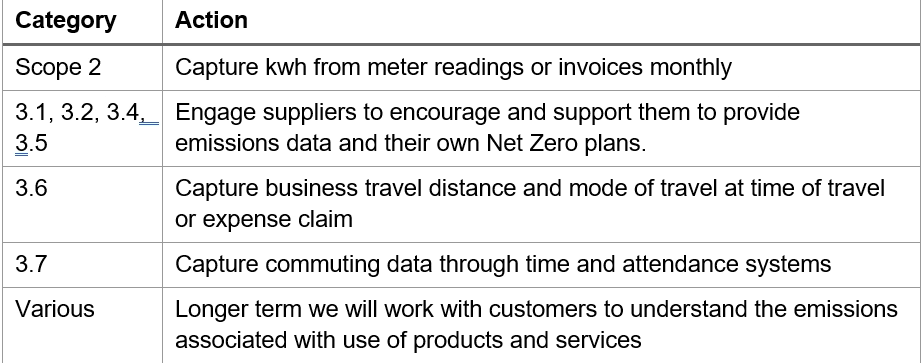
In order to progress to achieving Net Zero, we have adopted the carbon reduction targets detailed in the graph below.
These targets will be updated and recalculated as additional Scope 3 categories are added and data quality is improved (if changes create >5% variance in original calculations).
We project that carbon emissions will decrease to circa 12.7 tonnes by 2030. This is a reduction of 29% from our baseline year, on average a 4.9% year on year reduction.
Our reduction path is plotted below.
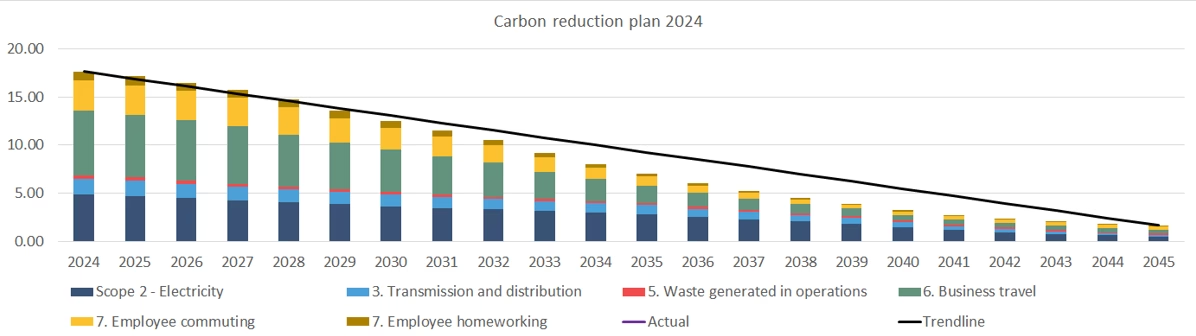
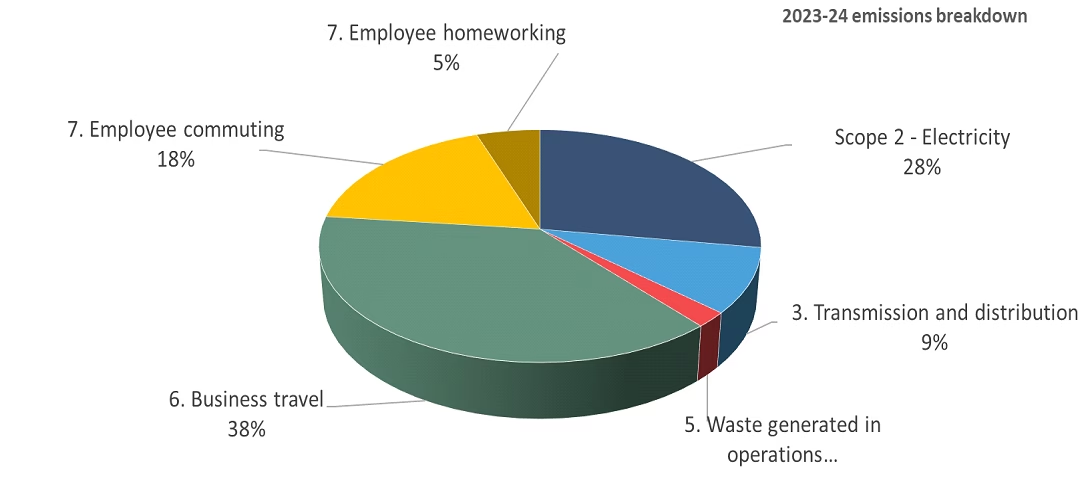
As our footprint is dominated by electricity use and employee travel, we have assumed reductions from government projected grid electricity decarbonisation and the adoption of lower carbon vehicles and fuels from 2030 based on current legislation and manufacturer plans.
The plan assumes some unavoidable emissions will remain by 2045, and these will be offset via a verified method of atmospheric CO2 removal.
We anticipate this path will change significantly over time as our options are evaluated and technology changes.
Completed Carbon Reduction Projects
Future Carbon Reduction Initiaves
Declaration and Sign Off
This Carbon Reduction Plan has been completed in accordance with PPN 06/21 and associated guidance and reporting standard for Carbon Reduction Plans.
Emissions have been reported and recorded in accordance with the published reporting standard for Carbon Reduction Plans and the GHG Reporting Protocol corporate standard , the Corporate Value Chain (Scope 3) Standard .and uses the appropriate Government emission conversion factors for greenhouse gas company reporting .
The Scope 3 emissions reported have been calculated in accordance with the published reporting standard for Carbon Reduction Plans and the Corporate Value Chain (Scope 3) Standard.
This Carbon Reduction Plan has been reviewed and signed off by the board of directors
Signed on behalf of Apollo 3D: Apollo3d 10/02/25
All conversion factors applied to relevant units to generate Kg CO2e, then reported as t CO2e.
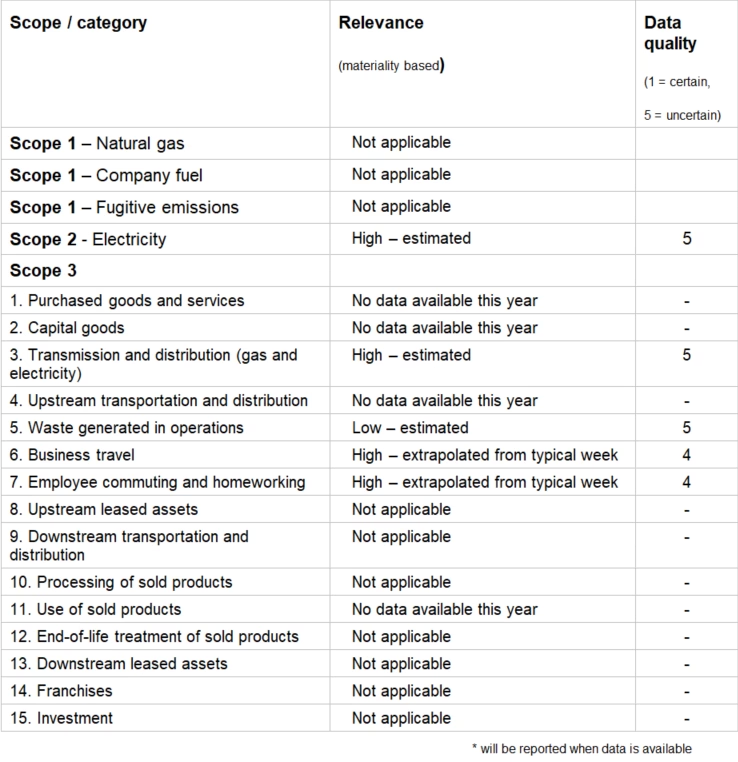
Scope 2:
Typical UK office energy use per square meter was assumed, with a heating efficiency gain applied to account for heat pump usage the primary heat source. Standard electricity conversion factors were applied as part of the generation of the bespoke emissions factor*.
Scope 3
3.3 Transmission and distribution
Electricity – Applying the scope 2 electricity data to the appropriate conversion factors*
Note: In this category we have included well-to-tank emissions
3.5 Waste generated in operations
Waste figures estimated from typical office use per person applied to the person days reported for office use, with split between incineration, recycling and landfill from national averages, using the appropriate conversion factors. *
3.6 Business travel
Business travel mileage was calculated from typical week scenarios assuming an average distance travelled in a client facing day to be 40 miles. The relevant conversion factors* for average vehicles were applied.
3.7 Employee commuting and home working
Typical weekly commuting distances per week were multiplied by working weeks in the year and the average car emissions factors* applied.
Full time equivalent working hours from home had the relevant conversion factor* applied.
* Taken from – LINK